📑 Table of Contents ▶
- No Knead Bread
- Understanding No Knead Bread
- Fundamentals
- Preparation/setup
- Directions
- Mastering the Technique of No Knead Bread
- Technique
- Tips/tricks
- Perfecting Your No Knead Bread
- Perfecting results
- Troubleshooting/variations
- Serving Your No Knead Bread
- Serving/presentation
- Pairings/storage
- No Knead Bread
- Related posts:
- Spinach and Feta Orzo Salad with Lemon Vinaigrette: Bursting with Flavor and Zest
- Easy Homemade White Bread
- Crispy Chicken Bacon Ranch Wrap
No Knead Bread
Embracing the art of making no knead bread has transformed my culinary journey. I recall a Sunday afternoon spent in my cozy kitchen, where the scent of freshly baked bread promised warmth and comfort. As I mixed the flour, water, and a sprinkle of yeast, I felt a sense of freedom. This method allows the dough to rise beautifully without the need for kneading, resulting in an artisan-style loaf that anyone can create.
No knead bread requires minimal effort. The process involves mixing simple ingredients, allowing time for the dough to work its magic as it rises. Watching the transformation from a sticky mixture to a beautiful golden loaf has become one of my favorite moments. Whether shared during family dinners or enjoyed with a morning coffee, this humble bread brings people together in a delightful way.
The beauty of no knead bread is in its simplicity. With just a few pantry staples, you can craft a loaf that rivals that of your favorite bakery. Let’s dive into the fundamentals of making this delightful bread, setting you up for success right from the start.
Understanding No Knead Bread
Fundamentals
No knead bread is all about ease and accessibility. The idea stems from the principle that yeast fermentation and gluten development can occur without the traditional kneading process. The long, slow fermentation helps develop flavors and texture, giving the bread a delightful crust and soft, airy interior.
Using only four simple ingredients—flour, salt, yeast, and water—you can create a loaf that is full of flavor and has an impressive rise. It’s a forgiving recipe that welcomes creativity. You can experiment with adding herbs, spices, or even cheese to enhance the flavor profile.
Preparation/setup
When preparing to make no knead bread, gather your ingredients and set aside a large mixing bowl. It’s crucial to have warm water, around 110 degrees F, to activate the yeast effectively. The dough’s stickiness is entirely normal and a sign of the hydration level that leads to a spectacular crust.
Start by combining three cups of all-purpose flour, two teaspoons of coarse sea salt, and half a teaspoon of active dry yeast in your mixing bowl. The mixture will come together quickly once you pour in the warm water. Stir with a wooden spoon until everything is well combined, but don’t worry about achieving a perfectly smooth dough.
Ingredients
To prepare a beautiful no knead bread, you will need:
- 3 cups of all-purpose flour
- 2 teaspoons of coarse sea salt
- 1/2 teaspoon of active dry yeast (or instant yeast)
- 1 1/2 cups of warm water (about 110 degrees F)
These ingredients form the backbone of your loaf, allowing for a simple yet satisfying baking experience.
Directions
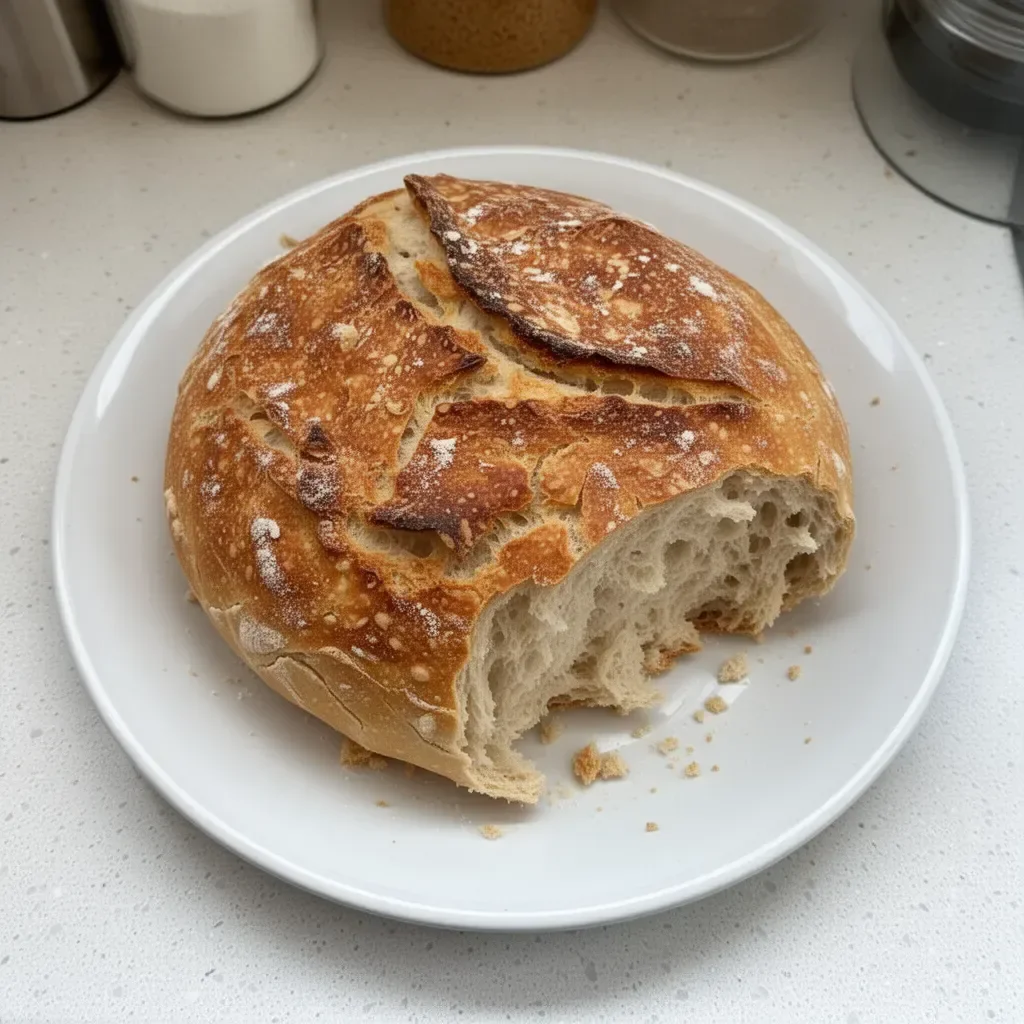
Creating no knead bread requires patience and anticipation as it patiently rises. Start by mixing the flour, salt, and yeast gently in a large bowl. Next, pour in the warm water and stir until the mixture is combined. The dough will feel sticky, indicating that it contains enough moisture. Cover the bowl and let it rise at room temperature for 3 to 4 hours, or allow it to slowly rise in the refrigerator for up to 15 hours.
Once the dough has risen, scoop it onto a floured work surface and shape it into a ball. Sprinkle a tiny bit of flour on the top, then place it on a piece of parchment paper. Cover it lightly with plastic wrap and allow it to rise for another 30 minutes.
Meanwhile, preheat your oven to 450 degrees F with an empty Dutch oven or cast iron pot inside. This step helps create a steam chamber that enhances the bread’s crust. After the second rise, uncover the dough ball and carefully lift it with the parchment paper into the hot pot. Cover with the lid and bake for 30 minutes. After that, remove the lid and continue baking for another 12 to 15 minutes, until the bread is golden brown. Finally, allow it to cool on a wire rack before slicing into it.
Mastering the Technique of No Knead Bread
Technique
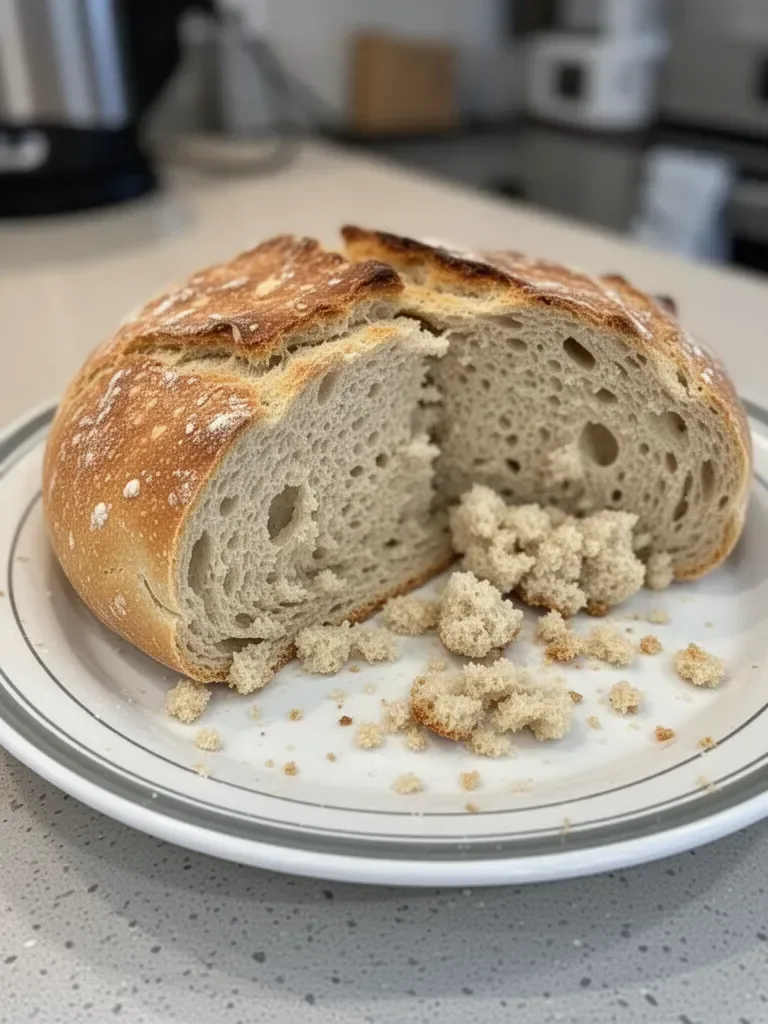
Emphasizing technique helps ensure your no knead bread turns out perfectly every time. The long fermentation helps develop the gluten structure, so resist the temptation to knead. Instead, allow the dough to rest, which enables natural fermentation and air bubbles to create lightness in your bread.
Another key technique is using a preheated Dutch oven. This step mimics the steam and humidity of a professional oven, creating the perfect crust. Ensure you lift the parchment with the dough into the pot carefully, avoiding splashes and mishaps.
Tips/tricks
Timing is crucial in getting your no knead bread just right. A longer fermentation time leads to a more flavorful loaf, so consider making the dough overnight for an even richer taste. The stickiness of the dough may seem daunting, but embrace it. A wet dough leads to a more open crumb, ideal for sopping up soups or spreads.
If you’re looking to flavor your bread further, consider incorporating herbs, garlic powder, or even cheese directly into the mixing step. You can get creative while keeping the base recipe intact.
Perfecting Your No Knead Bread
Perfecting results
To achieve the perfect no knead bread, monitor your dough closely. Factors like temperature and humidity can affect the bread’s rise. If your kitchen is a bit chilly, the dough may require additional time to rise, while a warmer space could speed up the process.
Expect to troubleshoot occasionally, especially if your first loaf doesn’t rise as much as desired. Adjusting the water temperature or allowing for a longer fermentation can often improve your results dramatically. Don’t hesitate to experiment until you find your ideal bread.
Troubleshooting/variations
If you find your bread is dense or has not risen adequately, there could be a few reasons for this. Insufficient yeast activation or using colder water could hinder the rise. Always check the water temperature and ensure your yeast is fresh.
On the flip side, if your loaf burns or overbakes, consider lowering the oven temperature slightly or shortening the baking time to achieve the perfect golden crust.
If you’re feeling adventurous, consider flavor variations by adding nuts, seeds, or olives to the dough. These add-ins create an exciting twist that keeps things interesting.
Serving Your No Knead Bread
Serving/presentation
Once you’ve carefully baked your no knead bread, it’s ready for presentation. Slice the loaf and see the beautiful, airy crumb. Serving it warm enhances the experience. Enjoy it with butter, a drizzle of olive oil, or alongside hearty soups and stews.
You can also create a lovely spread using herbs and garlic to enhance your bread experience. The golden crust, when placed on a rustic wooden board, makes for an inviting centerpiece at any gathering.
Pairings/storage
With its lovely texture and crust, no knead bread works beautifully when paired with various accompaniments. Consider serving it with flavored butters, dips, or even as a base for small appetizers. It’s a versatile bread that complements so many flavors.
Store any leftover bread in an open paper bag on the counter. This method prevents it from becoming too moist or stale. You can enjoy this lovely loaf for up to a week, though I doubt it will last that long!
The no knead bread journey opens up a world of delightful possibilities. With minimal effort and simple ingredients, you can craft a stunning loaf sure to impress. Embrace the method, experiment with flavors, and enjoy the process of baking your very own no knead bread.
Print
No Knead Bread
- Total Time: 57 minutes
- Yield: 1 loaf 1x
- Diet: Vegetarian
Description
A simple and delicious no-knead bread recipe that results in a crusty artisan loaf with minimal effort.
Ingredients
- 3 cups of all-purpose flour
- 2 teaspoons of coarse sea salt
- 1/2 teaspoon of active dry yeast
- 1 1/2 cups of warm water (about 110°F)
Instructions
- Mix the flour, salt, and yeast gently in a large bowl.
- Pour in the warm water and stir until the mixture is combined.
- Cover the bowl and let it rise at room temperature for 3 to 4 hours.
- Shape the dough into a ball and place it on parchment paper.
- Preheat your oven to 450°F with a Dutch oven inside.
- Lift the dough with the parchment into the hot pot and cover with the lid.
- Bake for 30 minutes, then remove the lid and bake for another 12 to 15 minutes.
- Cool the bread on a wire rack before slicing.
Notes
For best results, allow for longer fermentation times. Consider adding herbs or spices for additional flavor.
- Prep Time: 15 minutes
- Cook Time: 42 minutes
- Category: Bread
- Method: Baking
- Cuisine: American
Nutrition
- Serving Size: 1 slice
- Calories: 150
- Sugar: 0g
- Sodium: 400mg
- Fat: 1g
- Saturated Fat: 0g
- Unsaturated Fat: 1g
- Trans Fat: 0g
- Carbohydrates: 30g
- Fiber: 1g
- Protein: 5g
- Cholesterol: 0mg
Keywords: no knead bread, easy bread recipe, artisan bread
