📑 Table of Contents ▶
- Understanding No Knead Italian Artisan Bread
- Fundamentals
- Preparation/setup
- Directions
- Enhancing Your No Knead Italian Artisan Bread
- Technique
- Tips/tricks
- Perfecting No Knead Italian Artisan Bread
- Perfecting results
- Troubleshooting/variations
- Serving and Storing No Knead Italian Artisan Bread
- Serving/presentation
- Pairings/storage
- Conclusion
- Related posts:
- Ground Beef and Broccoli Recipe
- Thai Shrimp in a Blanket
- Roasted Root Vegetables
No Knead Italian Artisan Bread
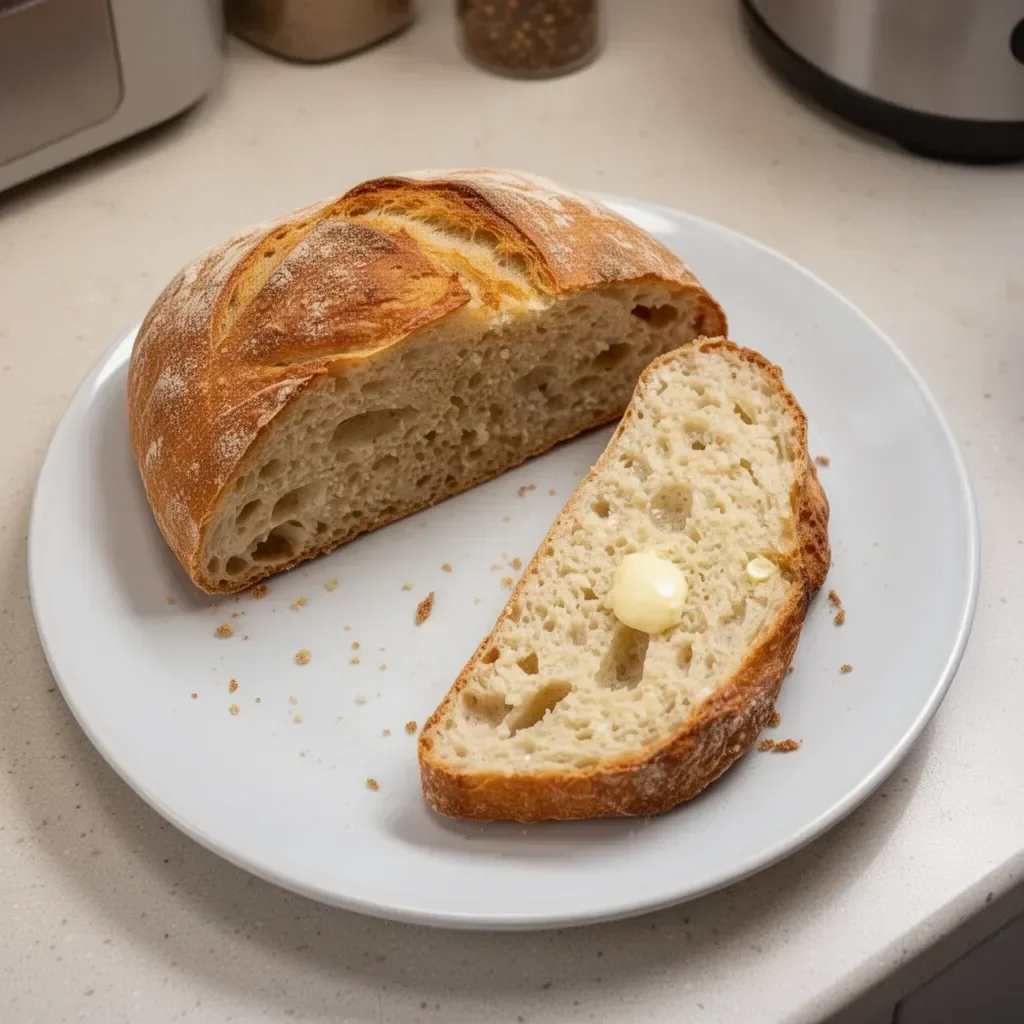
Creating artisan bread at home can seem intimidating, but let me assure you, it doesn’t have to be! The first time I pulled a perfectly risen loaf out of the oven, I stood there in awe, admiring the golden crust and the aroma that filled my kitchen. That moment sparked a joyful adventure in baking that I never anticipated would become such a central part of my cooking journey.
The beauty of this No Knead Italian Artisan Bread lies in its simplicity. With just a handful of ingredients, you can transform time and temperature into a loaf that sings with flavor. This recipe highlights the process of letting the dough rise naturally, creating texture and taste without the need for elaborate kneading techniques. It invites you to embrace the art of patience, as the dough transforms from a sticky mix into a crusty masterpiece.
As you embark on this culinary adventure, you’ll discover how easy and rewarding it is to bake your own bread. Each bite embodies the love and care you sowed into crafting something truly remarkable. Join me in the kitchen to explore the delightful world of No Knead Italian Artisan Bread!
Understanding No Knead Italian Artisan Bread
Fundamentals
No Knead Italian Artisan Bread thrives on the fundamental principles of bread-making. At its core, this method relies on the fermentation of dough and the natural development of gluten. You will truly appreciate how these elements play together to create a rich and complex flavor in your bread.
Using instant dry yeast simplifies the process, giving you a faster rise without needing any complicated steps. This yeast integrates seamlessly with the lukewarm water and honey, allowing it to awaken and do its magic. The beauty here is that you don’t need to dedicate extensive time to knead; instead, you focus on mixing and allowing the dough to rise gently.
The ingredients are straightforward, but they each play a crucial role in achieving that crusty exterior and soft, airy interior. The careful balance of flour, water, yeast, and salt creates a symphony of flavors. Each ingredient works in harmony to produce a loaf that stands apart in flavor and texture.
Preparation/setup
To set yourself up for success, start with clean surfaces and tools. Gather your ingredients: 2 ¼ cups of all-purpose flour, ¾ cups of lukewarm water, 1 ⅛ teaspoons of instant dry yeast, 1 teaspoon of honey, and 1 teaspoon of salt. Measure carefully, as accuracy is key in baking.
Begin by dissolving the yeast in a portion of the lukewarm water along with the honey. After about five minutes, you’ll see the mixture bloom and become bubbly, which indicates that the yeast is active. This is an exciting moment because it assures you that your bread will rise.
Next, combine the flour in a mixing bowl with the remaining lukewarm water. Quickly mix in the dissolved yeast using a fork, then incorporate the salt. Your dough will be soft and sticky; if it feels too dry, add a little extra lukewarm water. Patience is essential here as there is no kneading involved. You’re creating a perfect environment for the dough to rise and develop flavor.
Once mixed, sprinkle some flour over the dough, cover it with a damp cloth or plastic wrap, and position it in a warm area to let it proof. The rising time can vary depending on the warmth of your kitchen; watch for it to double in size, which usually takes between 45 minutes to 1 hour and 30 minutes.
Ingredients
To create No Knead Italian Artisan Bread, you will need the following ingredients:
- 2 ¼ cups all-purpose flour (9 oz) plus extra for topping
- ¾ cup lukewarm water (about 185 ml at 100-110°F)
- 1 ⅛ teaspoon instant dry yeast (0.20 oz)
- 1 teaspoon honey
- 1 teaspoon salt
Make sure you have all these elements at hand before starting. Fresh ingredients result in the best flavor profiles, so opt for high-quality all-purpose flour and yeast. This will enhance your baking experience and lead to a more delightful loaf.
Directions
- Dissolve the yeast in ¼ cup of lukewarm water and 1 teaspoon of honey. Leave to rise for 5 minutes until bubbly.
- In a mixing bowl, add flour together with the remaining water. Incorporate the dissolved yeast and mix quickly using a fork.
- Add salt to the mixture and stir again. The dough should feel soft and sticky, not smooth. If it’s too dry, add more lukewarm water as needed.
- Sprinkle some flour on top of the dough, cover the bowl with either a damp cloth or plastic wrap, and set it in a warm place. Let it rise for 45 minutes to 1 hour and 30 minutes until it almost doubles in size.
- Preheat your oven to 425°F (220°C).
- After the dough has risen, gently transfer it to a non-stick baking sheet that has been sprinkled with flour. Ensure the floured side is facing upwards.
- Score the bread with a very sharp knife, being careful not to cut too deep.
- Bake in the preheated oven for about 25 minutes. Lower the temperature to 325°F (160°C) and bake for an additional 10-15 minutes until the bread turns golden brown.
- After baking, let the loaf cool on a wire rack for at least 15 minutes before cutting.
Enhancing Your No Knead Italian Artisan Bread
Technique
To master the art of No Knead Italian Artisan Bread, you must pay attention to the fermentation process. This technique is simple yet essential, as it allows gluten to develop naturally. By not kneading, you encourage a longer fermentation, resulting in a robust flavor profile and an intriguing texture.
Also, keep in mind that temperature plays an important role in how your dough rises. A warm kitchen will promote quicker rising, while cooler environments may require longer proofing times. Embrace fluctuations in temperature as learning opportunities to improve your skill in managing fermentation.
Tips/tricks
-
Flour Type: While all-purpose flour works beautifully, you can experiment with bread flour for a chewier texture. This flour contains higher protein levels, helping to create an even stronger gluten network.
-
Add-ins: Feel free to add herbs, spices, or other flavorings directly into the dough during the mixing stage. Dried oregano or roasted garlic can elevate the flavor profile, making your bread even more irresistible.
-
Storing Dough: If you want to have fresh bread on hand, refrigerate your dough after the first rise. It will develop even more depth of flavor with extra rest time. Simply shape and bake it after chilling.
-
Baking Surface: Using a pizza stone or cast-iron skillet for baking can help achieve a crispier crust. Preheat the stone or skillet in the oven before placing your dough on it.
-
Humidity Control: In a particularly humid environment, you may need to adjust the flour and water ratios. Keep an eye on the dough consistency and adjust accordingly.
Perfecting No Knead Italian Artisan Bread
Perfecting results
Perfecting your No Knead Italian Artisan Bread comes down to practice and observation. One tip is to follow the rising times and check on the dough’s development regularly. Each kitchen environment will differ, and learning your unique space is key to success.
Baking bread is an intuitive process. If you notice that your dough is rising more slowly than expected, increase the warmth around it. Likewise, a dough that rises too quickly might benefit from a cooler area. Keep adjusting based on observations to improve your skills continuously.
Troubleshooting/variations
If your bread doesn’t have the desired rise, consider these troubleshooting tips. Always ensure your yeast is fresh and active. If it doesn’t bloom properly, it may be inactive, leading to dense bread.
In case the crust is too dark, reduce the baking time slightly once you’ve achieved the golden hue. Conversely, if your bread remains pale after the intended baking time, you can increase the duration while keeping an eye on it.
For different variations, consider experimenting with different flours or incorporating nuts and seeds into your dough. These choices can lead to entirely new flavor profiles while maintaining the foundational process.
Serving and Storing No Knead Italian Artisan Bread
Serving/presentation
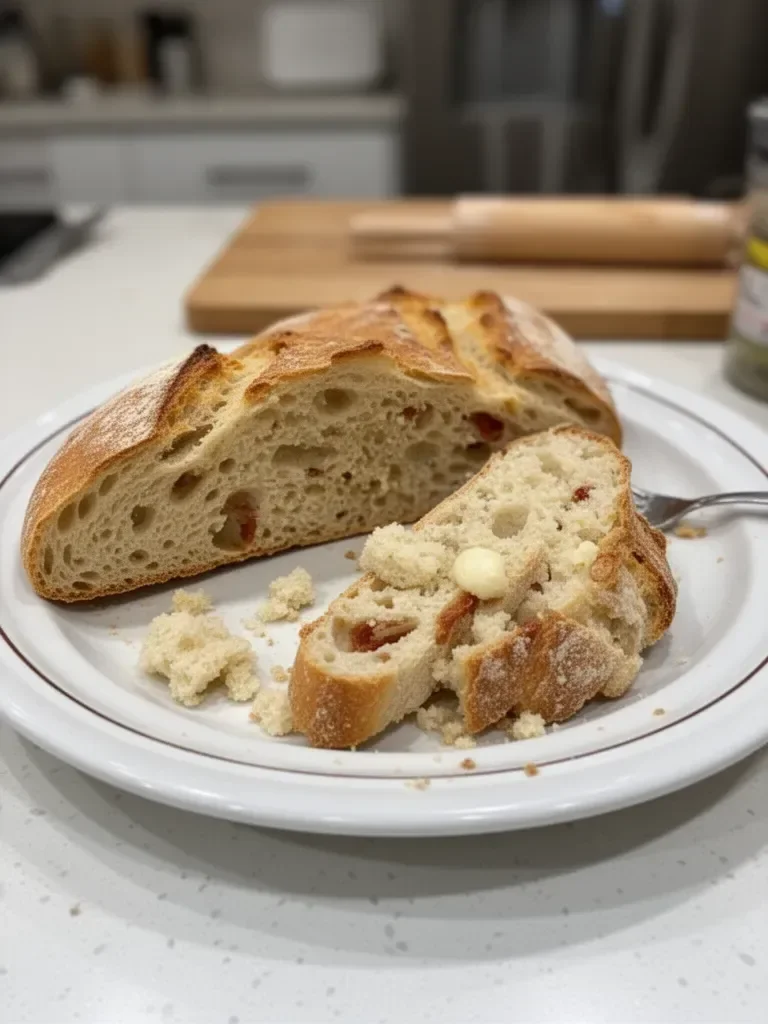
When it comes to serving your No Knead Italian Artisan Bread, presentation plays a significant role in enhancing the overall experience. Consider slicing it just before serving to preserve freshness. Arrange your slices on a wooden cutting board for an inviting display.
Pair the bread with spreads such as olive oil or butter for dipping. You could also serve it alongside a variety of cheeses for a rustic charcuterie board. This bread shines during family gatherings, meals with friends, and special occasions as a centerpiece.
Pairings/storage
Though I won’t mention any beverages for pairing, this bread pairs beautifully with hearty soups, stews, and salads. Its substantial texture complements a variety of dishes, making it a versatile addition to your culinary repertoire.
When it comes to storing the bread, it’s best enjoyed fresh. If you need to store it, place it in a paper bag to maintain some humidity while avoiding excess moisture. If you anticipate longer storage, consider freezing the loaf in plastic wrap and then in a foil layer. Defrost it at room temperature when you’re ready to take a slice.
Conclusion
The No Knead Italian Artisan Bread invites you into a world of simple baking. As you watch the dough rise and transform into a beautiful loaf, you’ll appreciate the process and the connection to home cooking. This method allows for flavor development, requiring minimal hands-on time while offering immense satisfaction. Embrace each baking opportunity as a chance to create something special and share it with those around you. Iterate and experiment to make this bread uniquely yours!
Print
No Knead Italian Artisan Bread
- Total Time: 60-105 minutes
- Yield: 1 loaf 1x
- Diet: Vegetarian
Description
A simple and rewarding recipe for crafting delicious No Knead Italian Artisan Bread with a crusty exterior and soft, airy interior.
Ingredients
- 2 ¼ cups all-purpose flour (9 oz) plus extra for topping
- ¾ cup lukewarm water (about 185 ml at 100-110°F)
- 1 ⅛ teaspoons instant dry yeast (0.20 oz)
- 1 teaspoon honey
- 1 teaspoon salt
Instructions
- Dissolve the yeast in ¼ cup of lukewarm water and 1 teaspoon of honey. Leave to rise for 5 minutes until bubbly.
- In a mixing bowl, add flour together with the remaining water. Incorporate the dissolved yeast and mix quickly using a fork.
- Add salt to the mixture and stir again. The dough should feel soft and sticky, not smooth. If it’s too dry, add more lukewarm water as needed.
- Sprinkle some flour on top of the dough, cover the bowl with either a damp cloth or plastic wrap, and set it in a warm place. Let it rise for 45 minutes to 1 hour and 30 minutes until it almost doubles in size.
- Preheat your oven to 425°F (220°C).
- After the dough has risen, gently transfer it to a non-stick baking sheet that has been sprinkled with flour. Ensure the floured side is facing upwards.
- Score the bread with a very sharp knife, being careful not to cut too deep.
- Bake in the preheated oven for about 25 minutes. Lower the temperature to 325°F (160°C) and bake for an additional 10-15 minutes until the bread turns golden brown.
- After baking, let the loaf cool on a wire rack for at least 15 minutes before cutting.
Notes
Consider adding herbs or spices to enhance the flavor. Refrigerate the dough after the first rise for deeper flavor.
- Prep Time: 15 minutes
- Cook Time: 35 minutes
- Category: Bread
- Method: Baking
- Cuisine: Italian
Nutrition
- Serving Size: 1 serving
- Calories: 200
- Sugar: 1g
- Sodium: 330mg
- Fat: 1g
- Saturated Fat: 0g
- Unsaturated Fat: 1g
- Trans Fat: 0g
- Carbohydrates: 42g
- Fiber: 2g
- Protein: 6g
- Cholesterol: 0mg
Keywords: artisan bread, no knead bread, Italian bread, baking, easy bread recipe
