📑 Table of Contents ▶
- Thai Peanut Chicken: The Fundamentals
- Fundamentals
- Preparation/Setup
- Directions
- Thai Peanut Chicken Techniques
- Technique
- Tips/Tricks
- Perfecting Thai Peanut Chicken
- Perfecting Results
- Troubleshooting/Variations
- Serving Thai Peanut Chicken
- Serving/Presentation
- Pairings/Storage
- Conclusion
- Thai Peanut Chicken
- Related posts:
- Creepy Eyeball Meatballs: Sinfully Savory Halloween Delight
- Loaded Bacon Cheeseburger Pasta: How to Make the Best Ever
- Easy Roasted Tomato Soup
Thai Peanut Chicken
Chicken holds a special place in many kitchens, often becoming the heart of mealtime gatherings. There’s something inherently comforting about a well-cooked chicken dish, especially one that packs vibrant flavors like Thai Peanut Chicken. Growing up, I recall my family savored every bite of chicken entrees, sharing stories and laughter across the table. Those cherished moments inspired me to recreate beloved chicken recipes that bring people together today.
Thai Peanut Chicken stands out because it delivers that delightful sweet and savory combination with a creamy, nutty sauce. The warmth of garlic, soy sauce, and the richness of coconut milk meld harmoniously, creating a dish that warms the spirit. Simplicity is key when it comes to this recipe, which emphasizes accessible ingredients patiently waiting to shine.
Through this dish, culinary memories are made as families gather to savor the richness of home-cooked meals. Prepare to embark on this journey where Thai Peanut Chicken turns weeknight dinners into memorable feasts. Indulging in this dish isn’t just about satisfying hunger; it’s also about celebrating the joy of food—a connection that transcends tastes and traditions.
Thai Peanut Chicken: The Fundamentals
Fundamentals
Thai Peanut Chicken offers an approachable way to enjoy a globally inspired meal right from your kitchen. With a few simple techniques, anyone can master this dish. The base of this recipe includes tender chicken breast, aromatic garlic, and a luscious sauce that features peanut butter and coconut milk. It caters not only to flavor-seekers but also to those looking for a quick weeknight meal.
Key to the success of Thai Peanut Chicken is the balance of flavors. The umami from soy sauce beautifully complements the rich creaminess of coconut milk. This combination creates a delicious sauce that clings to the freshly cooked chicken. Adjusting the seasoning allows you to customize the taste to your preference, providing a delightful cooking experience.
Preparation/Setup
To craft Thai Peanut Chicken, the preparation phase plays a crucial role in ensuring a smooth cooking process. Start by gathering all your ingredients, which include chicken breasts, garlic, soy sauce, peanut butter, coconut milk, salt, pepper, and vegetable oil. Having everything at arm’s reach streamlines cooking and enhances the overall experience.
Begin by cutting the chicken breasts into bite-sized pieces. This not only helps them cook evenly but also makes it easier to absorb the sauce’s flavors. Next, season the chicken pieces with a sprinkle of salt and pepper. This initial seasoning lays the groundwork for a dish that is full of flavor.
Ingredients
Here’s what you’ll need to make Thai Peanut Chicken:
- 4 boneless, skinless chicken breasts (about 1.5 lbs)
- 2 cloves fresh garlic, minced
- 1/4 cup low-sodium soy sauce
- 1/3 cup creamy natural peanut butter
- 1/2 cup full-fat coconut milk
- Salt and pepper to taste
- 1 tablespoon vegetable oil
With these ingredients, you’ll create a satisfying meal that showcases delightful flavors.
Directions
- Cut the chicken breasts into bite-sized pieces and season with salt and pepper.
- In a large skillet over medium-high heat, add vegetable oil. Cook the chicken until browned and cooked through, about 5-7 minutes. Remove from skillet and set aside.
- In the same skillet, reduce heat to medium, add minced garlic, and sauté for about one minute until fragrant.
- Stir in soy sauce, peanut butter, and coconut milk; mix well.
- Return the chicken to the skillet, stirring until coated in the sauce. Let it simmer for a few minutes until heated through.
- Serve warm, garnished with chopped peanuts or cilantro if desired.
Thai Peanut Chicken Techniques
Technique
Cooking is as much about technique as it is about ingredients. For Thai Peanut Chicken, precise cooking methods ensure that each element contributes to the final dish. Searing the chicken pieces in hot vegetable oil creates a beautiful golden crust while locking in moisture. This results in juicy chicken that forms a flavorful base for the rich sauce.
When adding garlic to the skillet, cooking it just until fragrant is crucial. Burning garlic can introduce bitterness into your dish, so keep a keen eye on it. Additionally, when you add the peanut butter and coconut milk, stirring well allows for the sauce to meld and become creamy. This technique results in a silky texture that clings to every piece of chicken.
Tips/Tricks
Enhancing your Thai Peanut Chicken experience comes down to a few thoughtful tips. For a touch of spice, consider adding red pepper flakes to the sauce, giving it that extra kick many crave. Furthermore, if you prefer a thinner sauce, increase the coconut milk or add a splash of water to achieve the desired consistency.
Cooking the chicken in batches rather than overcrowding the pan can ensure even cooking. Overcrowding may lead to steaming instead of searing, compromising flavor and texture. Lastly, don’t shy away from customizing the dish with your favorite vegetables. Bell peppers, snap peas, or broccoli can easily complement this recipe, elevating its nutritional value and presentation.
Perfecting Thai Peanut Chicken
Perfecting Results
To achieve the best results with your Thai Peanut Chicken, focus on timing and technique. The balance of cooking each ingredient separately allows for the maximum flavor to develop. Stirring the sauce continually when combining the ingredients ensures that the peanut butter dissolves smoothly without clumps.
Another key factor is allowing the chicken to rest briefly after cooking. This rests the juices within the chicken, keeping it moist and tender. Failing to give the chicken a moment can lead to dryness, particularly when serving. A well-rested chicken ensures a palatable texture in every bite.
Troubleshooting/Variations
If you encounter challenges while preparing Thai Peanut Chicken, adjustments can always enhance the experience. Should your sauce turn too thick, simply add more coconut milk or a splash of water. Conversely, if it feels too thin, allow it to simmer a bit longer for the sauce to thicken naturally.
For those looking for a vegetarian option, substituting the chicken with tofu can yield delicious results. Firm tofu absorbs the flavors beautifully and holds its texture when cooked properly. Additionally, make sure to adjust cooking time to ensure the tofu becomes golden and crispy.
Serving Thai Peanut Chicken
Serving/Presentation
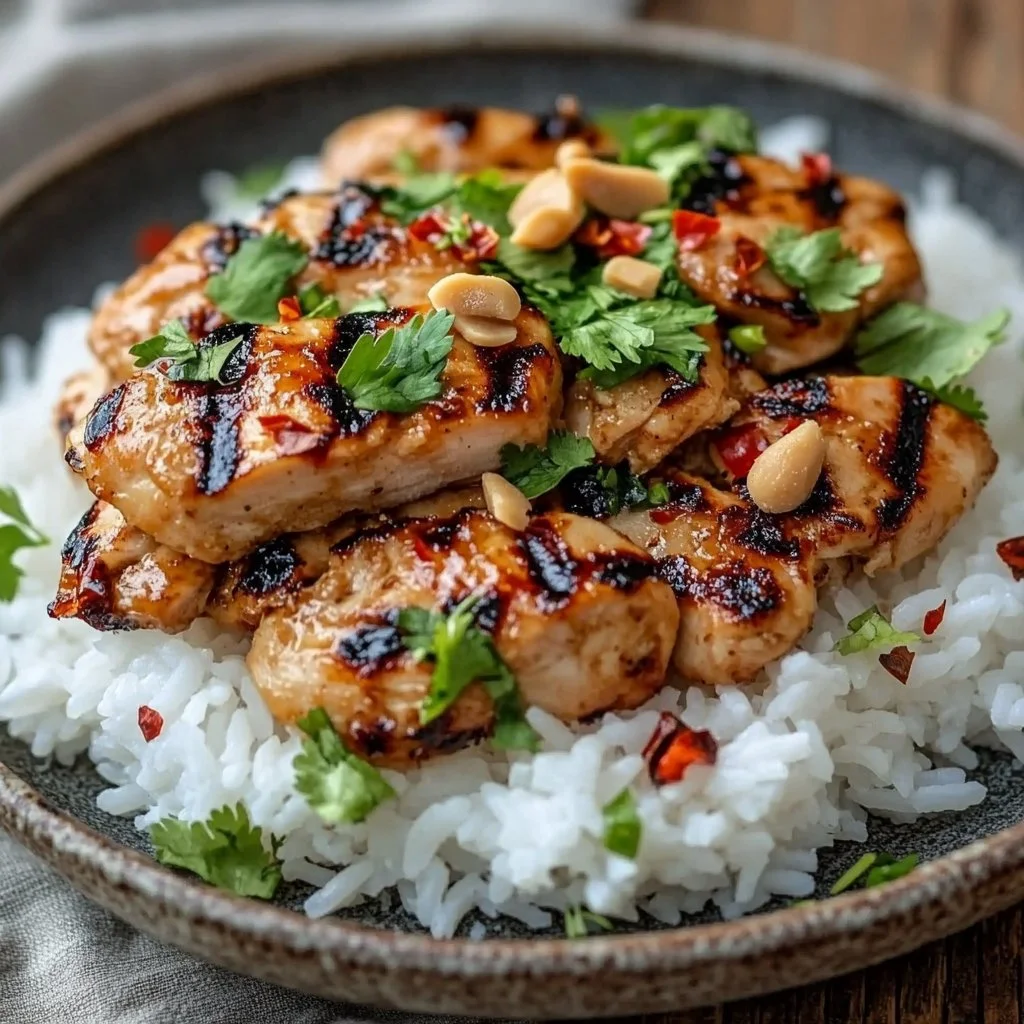
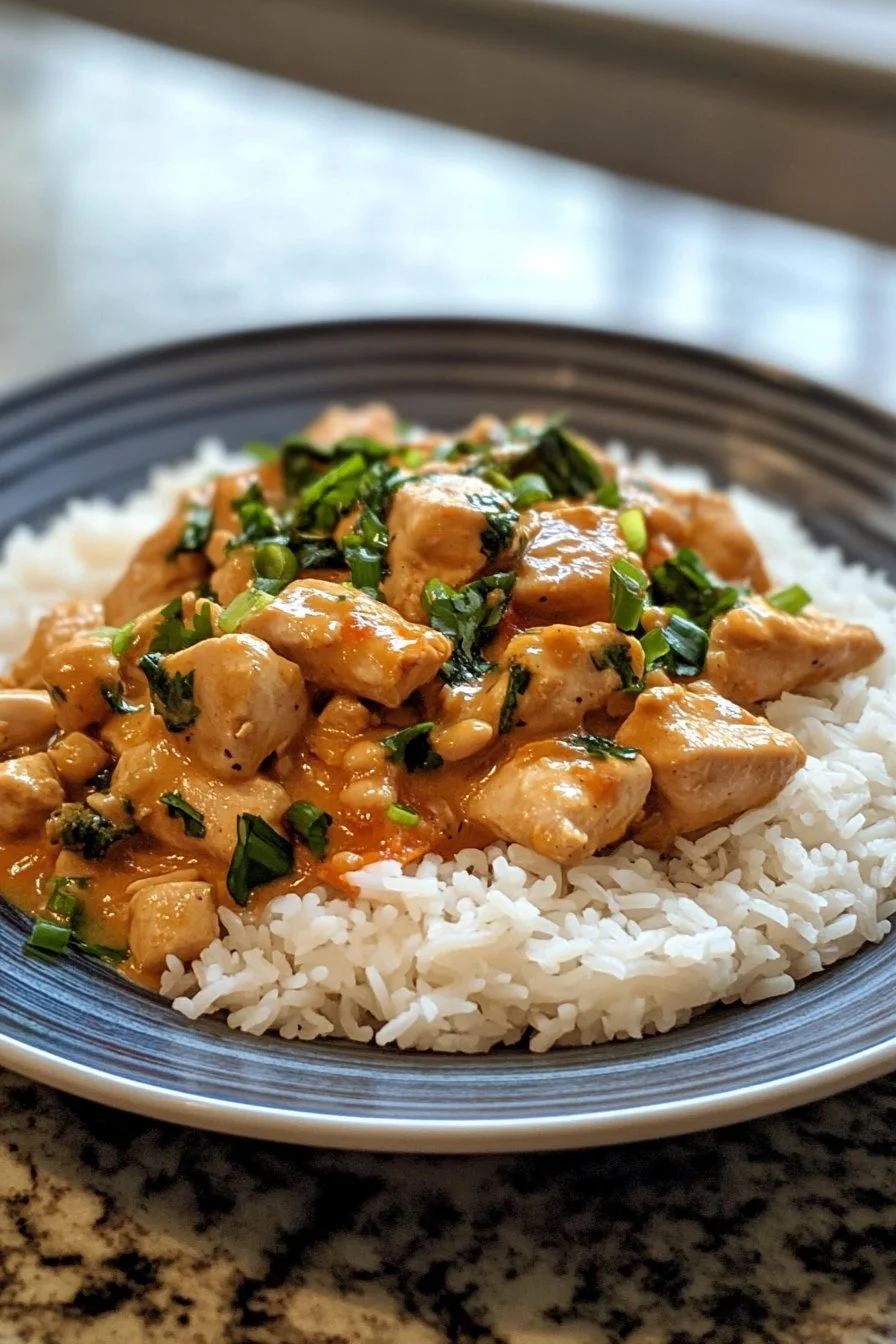
Serving Thai Peanut Chicken is an opportunity to showcase the vibrant colors and textures of your dish. Plating can be simple yet elegant: spoon the saucy chicken onto a bed of rice, or serve it alongside steamed vegetables. Garnish with chopped peanuts or fresh cilantro to add a pop of color and freshness that brightens the plate.
Accompanying this dish with a side of jasmine rice or quinoa can elevate your meal. The fluffy grains provide a perfect canvas for soaking up the creamy peanut sauce. Arrange the food artfully, as presenting a beautiful plate encourages enjoyment and makes for a delightful meal sharing experience.
Pairings/Storage
For a well-rounded feast, pair Thai Peanut Chicken with a refreshing cucumber salad or steamed greens. These sides add crunch and balance the dish’s richness without overshadowing the main event.
Should you have leftovers, store them in an airtight container in the refrigerator for up to three days. Reheat gently on the stove or in the microwave, adding a splash of coconut milk if needed to restore creaminess. The flavors often deepen with time, making it a satisfying option for lunch or dinner the next day.
Conclusion
Thai Peanut Chicken encapsulates the essence of home cooking, delivering vibrant flavors and warmth straight to the table. From the first bite, it transports you to a place of comfort and joy—perfect for gatherings with family and friends. Creating this dish requires simple techniques and accessible ingredients, making it an achievable goal for any home cook. Embrace the beauty of cooking this delightful meal and share the joy of food.
Print
Thai Peanut Chicken
- Total Time: 30 minutes
- Yield: 4 servings 1x
- Diet: Gluten-Free
Description
A comforting and vibrant dish featuring tender chicken in a creamy, nutty sauce made with peanut butter and coconut milk.
Ingredients
- 4 boneless, skinless chicken breasts (about 1.5 lbs)
- 2 cloves fresh garlic, minced
- 1/4 cup low-sodium soy sauce
- 1/3 cup creamy natural peanut butter
- 1/2 cup full-fat coconut milk
- Salt and pepper to taste
- 1 tablespoon vegetable oil
Instructions
- Cut the chicken breasts into bite-sized pieces and season with salt and pepper.
- In a large skillet over medium-high heat, add vegetable oil. Cook the chicken until browned and cooked through, about 5-7 minutes. Remove from skillet and set aside.
- In the same skillet, reduce heat to medium, add minced garlic, and sauté for about one minute until fragrant.
- Stir in soy sauce, peanut butter, and coconut milk; mix well.
- Return the chicken to the skillet, stirring until coated in the sauce. Let it simmer for a few minutes until heated through.
- Serve warm, garnished with chopped peanuts or cilantro if desired.
Notes
For a touch of spice, add red pepper flakes to the sauce. Customize with your favorite vegetables for added nutritional value.
- Prep Time: 15 minutes
- Cook Time: 15 minutes
- Category: Main Course
- Method: Stovetop
- Cuisine: Thai
Nutrition
- Serving Size: 1 serving
- Calories: 400
- Sugar: 7g
- Sodium: 600mg
- Fat: 20g
- Saturated Fat: 8g
- Unsaturated Fat: 10g
- Trans Fat: 0g
- Carbohydrates: 18g
- Fiber: 2g
- Protein: 31g
- Cholesterol: 70mg
Keywords: chicken, Thai cuisine, peanut sauce, easy dinner
