📑 Table of Contents ▶
- Vegetable Stir-Fry
- Creating the Ultimate Vegetable Stir-Fry
- Fundamentals
- Preparation/Setup
- Mastering the Vegetable Stir-Fry Technique
- Technique
- Tips/Tricks
- Perfecting Your Vegetable Stir-Fry
- Perfecting Results
- Troubleshooting/Variations
- Serving and Storing Your Vegetable Stir-Fry
- Serving/Presentation
- Pairings/Storage
- Conclusion
- FAQs – Vegetable Stir-Fry
- Related posts:
- Gordon Ramsay's Crunchy Coleslaw
- Louisiana Remoulade Sauce
- Crunchy Ramen Salad
I remember the first time I made a vegetable stir-fry in my tiny kitchen. The vibrant colors of the fresh vegetables immediately caught my eye, and the sizzling sound as they hit the hot pan was music to my ears. It’s a dish that embodies the essence of simplicity and flavor, turning a collection of humble ingredients into a delightful meal.
Vegetable stir-fry quickly became a staple in my home because of its versatility and ease. You can adapt it to whatever vegetables you have on hand, making it a perfect choice for a quick dinner. Plus, the combination of textures and flavors makes every bite a satisfying experience.
In my culinary journey, I’ve found that a good vegetable stir-fry is more than just a side dish. It’s a way to celebrate the bounty of nature’s produce, bringing together a burst of colors and nutrients in every serving. As we dive into this recipe, you’ll discover how easy it is to create a delicious and nutritious meal that will impress your family and friends.
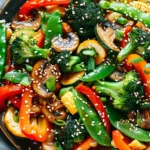
Vegetable Stir-Fry
- Total Time: 25 minutes
- Yield: 4 servings
Description
Discover how to make a delicious and healthy Vegetable Stir-Fry with our easy-to-follow recipe. Perfect for a quick and nutritious meal!
Ingredients
- – 1 tablespoon (15 ml) olive oil
- – 1 sliced red bell pepper
- – 1 sliced yellow bell pepper
- – 1 small sliced zucchini
- – 1 cup (150 g) sugar snap peas
- – 1 cup (128 g) sliced carrots
- – 1 cup (70 g) sliced mushrooms
- – 2 cups (300 g) broccoli
- – 1 (15-ounce) can baby corn, drained
- – 1 (8-ounce) can water chestnuts, drained
- – green onions for garnish
- – sesame seeds for garnish
- – ¼ cup (60 ml) soy sauce
- – 3 garlic cloves, minced
- – 3 tablespoons (37 g) brown sugar
- – 1 teaspoon (5 ml) sesame oil
- – ½ cup (120 ml) beef broth
- – 1 tablespoon (8 g) cornstarch
Instructions
- Pour a tablespoon of olive oil into a large skillet or wok and heat it over medium-high heat.
- Introduce sliced red and yellow bell peppers, zucchini slices, sugar snap peas, carrot slices, mushrooms, broccoli, drained baby corn, and water chestnuts to the skillet.
- Cook, stirring often, for about 2-3 minutes until the vegetables are nearly tender.
- In a small bowl, combine soy sauce, minced garlic, brown sugar, sesame oil, beef broth, and cornstarch by whisking them together.
- Drizzle the mixture over the vegetables and continue cooking until the sauce thickens and the vegetables become tender.
- Top with green onions and sesame seeds if you like.
Notes
- Marinate sliced vegetables in soy sauce mixture for 30 minutes for a richer flavor.
- Add snow peas or bok choy for variety and nutrition.
- Use vegetable broth to make this dish vegetarian and delicious.
- Prep Time: 15 minutes
- Cook Time: 10 minutes
- Category: Main Course
- Method: Stir-Frying
- Cuisine: Asian
Nutrition
- Calories: 250
- Fat: 8g
- Protein: 10g
Keywords: stir-fry vegetables, soy sauce stir-fry, vegetable stir-fry, wok veggies, sesame chicken stir-fry
Creating the Ultimate Vegetable Stir-Fry
Fundamentals
The key to an amazing vegetable stir-fry lies in understanding its fundamentals. Start by gathering fresh, vibrant vegetables. For this recipe, we use red and yellow bell peppers, zucchini, sugar snap peas, carrots, mushrooms, broccoli, baby corn, and water chestnuts. These ingredients not only add color but also a variety of textures, making each bite delightful.
Ensure your vegetables are sliced uniformly for even cooking. This aids in achieving that perfect tender-crisp texture that is the hallmark of a great stir-fry. The choice of oil is also crucial; olive oil is a wonderful option for its flavor and health benefits. Keep your skillet or wok hot to quickly sear the vegetables, locking in their natural flavors.
Preparation/Setup
Before you start cooking, prepare all your ingredients. Measure out the olive oil, slice the bell peppers, zucchini, and carrots, and have the soy sauce mixture ready. This mixture, made from soy sauce, minced garlic, brown sugar, sesame oil, beef broth, and cornstarch, will be the sauce that ties everything together.
Having everything prepped and within arm’s reach ensures a smooth cooking process. Stir-frying happens quickly, so you don’t want to be scrambling for ingredients while your vegetables overcook. Once everything is ready, you’re set to create a delicious one-pot vegetable meal that’s both healthy and satisfying.
Mastering the Vegetable Stir-Fry Technique
Technique
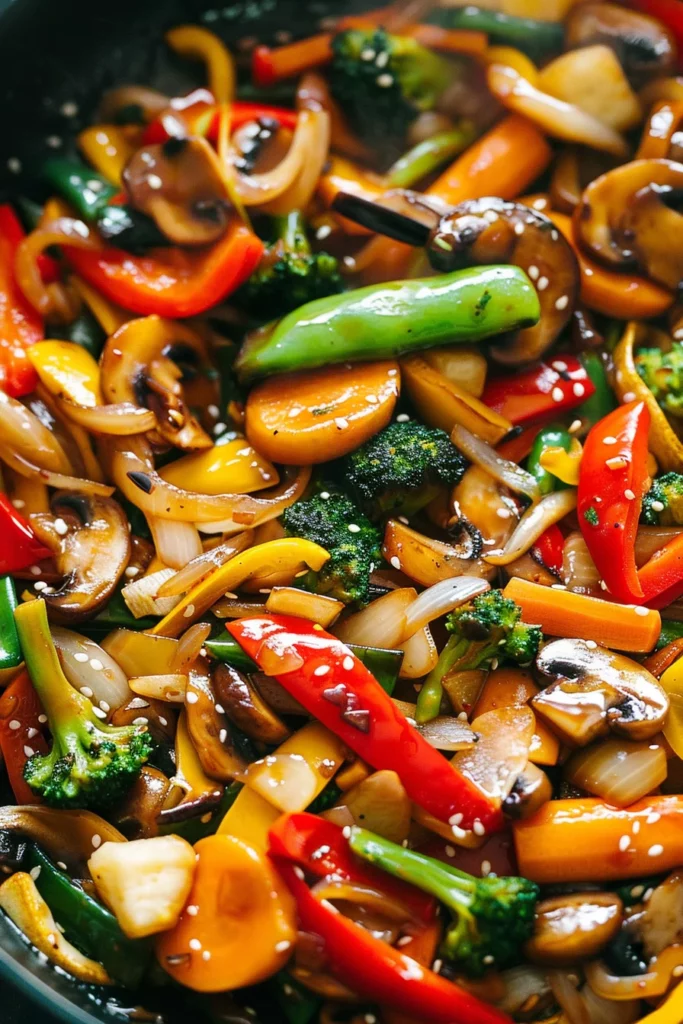
Perfecting the vegetable stir-fry technique starts with heating your skillet properly. Pour the olive oil into the skillet and let it heat over medium-high heat. This ensures that your vegetables will sear quickly, preserving their vibrant colors and crisp texture.
Add the vegetables in the order of their cooking times. Start with the bell peppers and carrots, as they take longer to cook. Follow with the zucchini and sugar snap peas, and then the mushrooms and broccoli. This staggered approach ensures each vegetable cooks perfectly and retains its unique flavor and texture.
Vegetable Stir-Fry
Tips/Tricks
To elevate your vegetable stir-fry, consider these tips. Use a high heat to achieve that signature stir-fry flavor, often called “wok hei” in Asian cuisine. This imparts a slightly smoky, charred flavor that enhances the dish.
Another trick is to not overcrowd the pan. If your skillet is too small, cook in batches to ensure each vegetable gets the proper sear. Finally, garnish with green onions and sesame seeds for added flavor and a touch of elegance.
Perfecting Your Vegetable Stir-Fry
Perfecting Results
For the best results, focus on achieving the right balance of flavors. The combination of soy sauce, garlic, and sesame oil in the sauce provides a savory umami taste, while the brown sugar adds a hint of sweetness that complements the vegetables.
Cook the vegetables until they are tender-crisp. This means they should be cooked through but still have a bit of bite. The sauce should be thick enough to coat the vegetables without being soupy, which is where the cornstarch comes into play. It helps thicken the sauce as it cooks, ensuring it clings to every piece of vegetable.
Troubleshooting/Variations
If your stir-fry turns out too watery, it’s likely due to overcrowding the pan or not cooking at a high enough temperature. Ensure your pan is not too crowded, and crank up the heat if needed. For variations, try adding other vegetables like bok choy or snow peas, or use tofu for added protein.
For a different flavor profile, explore international influences by incorporating spices or sauces. A dash of chili flakes can add a bit of heat, while a splash of lemon juice brightens the dish. Experimenting with different ingredients can lead to new favorite versions of this classic vegetable stir-fry.
Serving and Storing Your Vegetable Stir-Fry
Serving/Presentation
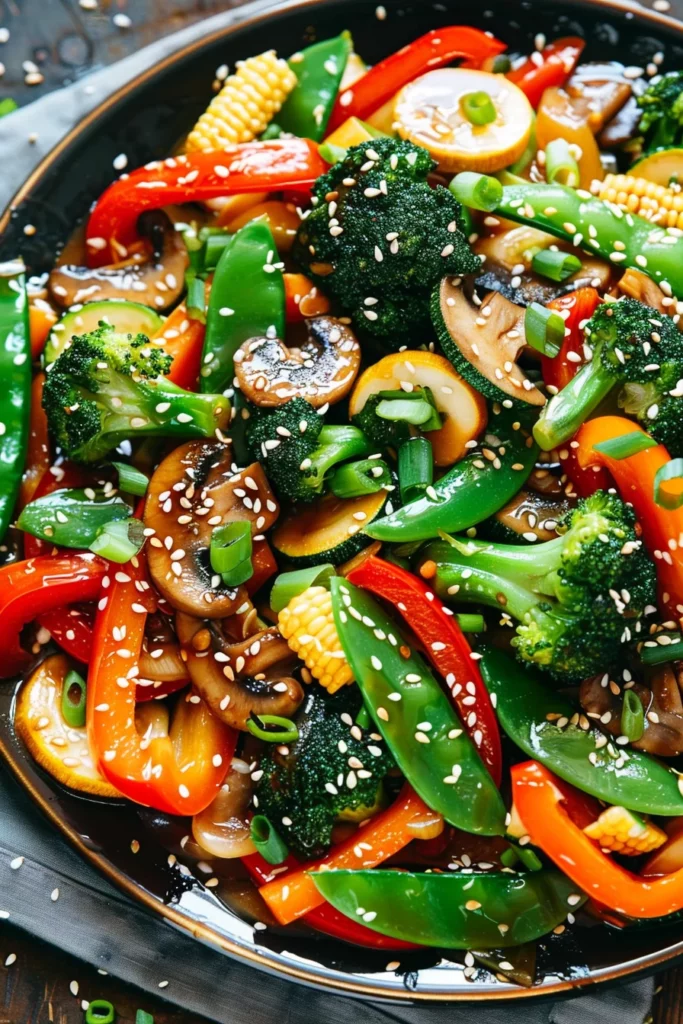
When serving your vegetable stir-fry, presentation is key. Use a large, shallow bowl to showcase the colorful array of vegetables. Top with sliced green onions and a sprinkle of sesame seeds for a touch of sophistication. This dish pairs beautifully with a side of easy vegetable and beef bread, adding a hearty complement to the fresh, vibrant vegetables.
For a full meal, serve the stir-fry over a bed of steamed rice or alongside a one-pot vegetable meal. This adds a comforting element, perfect for a cozy dinner at home.
Vegetable Stir-Fry
Pairings/Storage
Store any leftovers in an airtight container in the refrigerator. The flavors meld beautifully overnight, making for a delicious next-day meal. Reheat gently in a skillet to preserve the texture of the vegetables.
For those seeking a lighter option, consider pairing this stir-fry with a simple salad or a dish like vegetable sous vide recipe. This approach maintains the focus on fresh, nutritious produce while offering a satisfying meal.
Conclusion
This vegetable stir-fry recipe showcases the beauty and flavor of fresh produce. With simple ingredients and straightforward techniques, you can create a dish that’s both nutritious and delicious. The combination of vibrant colors, crisp textures, and savory sauce makes it a standout meal. Whether served as a main dish or alongside other culinary creations, this stir-fry is sure to impress. Enjoy exploring the endless possibilities this versatile recipe offers, and savor the satisfaction of cooking a meal that brings everyone together around the table.
