📑 Table of Contents ▶
- Part 1 — Soy Sauce Eggs: The Basics
- Fundamentals
- Preparation/Setup
- Directions
- Part 2 — Memorable Techniques for Soy Sauce Eggs
- Technique
- Tips and Tricks
- Part 3 — Perfecting Your Soy Sauce Eggs
- Perfecting Results
- Troubleshooting and Variations
- Part 4 — Serving and Enjoying Soy Sauce Eggs
- Serving and Presentation
- Pairings and Storage
- Conclusion
- Soy Sauce Eggs
- Related posts:
- Squash Croquettes: The Ultimate Guide to Making Delicious Snacks
- No-knead Rustic Artisan Loaf: Perfectly Easy Recipe
- Roasted Garlic Cowboy Butter
Soy Sauce Eggs
Crafting soy sauce eggs has become one of my favorite culinary projects. The moment I crack open an egg and reveal its perfectly boiled center, I remember the first time I enjoyed these delectable bites. They bring back memories of family dinners, where laughter and stories swirl just as beautifully as the flavors. The combination of the soy sauce and garlic in the marinade enriches the eggs, transforming a simple ingredient into a delightful centerpiece.
Every cook can appreciate the satisfaction of creating something delicious without the fuss. With just a few ingredients, you can prepare soy sauce eggs that not only taste incredible but also serve as a versatile dish. These eggs pack a punch of flavor and can complement a variety of meals, making them an excellent addition to your recipe repertoire.
I find joy in sharing this recipe because it encourages everyone to experiment in the kitchen with minimal ingredients. The beauty of soy sauce eggs lies in their simplicity and adaptability, allowing your creativity to shine through. Let’s dive into the world of soy sauce eggs and unlock the wonderful flavors they have to offer.
Part 1 — Soy Sauce Eggs: The Basics
Fundamentals
Understanding the fundamentals of preparing soy sauce eggs is essential for achieving optimal flavor and texture. Boiling the eggs to the perfect consistency is the first step. Depending on your preference for yolk texture, the boiling time can vary. The ideal timing ranges from seven minutes for a runny yolk to seven and a half minutes for a firmer texture. A properly boiled egg should have a tender yet satisfying bite.
The marinade makes soy sauce eggs truly special. By combining soy sauce, garlic, rice vinegar, sugar, and water, you create a flavorful base that will infuse the eggs over time. The tanginess of the rice vinegar balances the umami flavors from the soy sauce. This balance creates a rich profile that takes the eggs from ordinary to extraordinary.
Preparation/Setup
Preparation is key when it comes to making perfect soy sauce eggs. Start by preparing an icy bath of cold water and ice cubes in a bowl. As the eggs cook, this ice bath will halt the cooking process, ensuring they don’t overcook. You want the shells to come off easily, so cooling them rapidly is crucial.
Next, gather your ingredients. You’ll need six large eggs, three grated garlic cloves, rice vinegar, soy sauce, and sugar, along with water to create the marinade. Once you have everything ready, you can focus on the boiling process, confident that you have all you need at your fingertips.
Ingredients
Using simple yet impactful ingredients will yield delicious soy sauce eggs. Here’s what you’ll need:
- 6 large eggs
- ¾ cup soy sauce
- 3 garlic cloves, grated
- 1½ tablespoons rice vinegar
- 1½ tablespoons sugar
- 2 cups water
Directions
Prepare a bowl with cold water and enough ice cubes to create an icy bath. Set aside.
In a medium saucepan, bring enough water to cover the eggs to a rolling boil. Carefully drop eggs into the water and boil for 7 minutes for runny yolk or 7½ minutes for a more set yolk. For the first one and a half minutes, carefully swirl the water to help center the yolk.
After the desired cooking time, remove the eggs from the pan and place them into the ice bath. Leave them submerged for 2 minutes or until cool enough to handle.
Under slow running water, deshell the eggs and place them on a paper towel to remove any excess water.
In a small saucepan, combine the soy sauce, grated garlic, rice vinegar, sugar, and water. Bring this mixture to a boil, then reduce the heat to a simmer and cook for 3 minutes. Remove from heat and allow it to cool to room temperature.
Pour the soy sauce mixture into a medium or large bowl. Add the eggs and cover them completely with the marinade. To achieve the best flavor, steep the eggs in the soy sauce mixture for at least 12-24 hours before consuming.
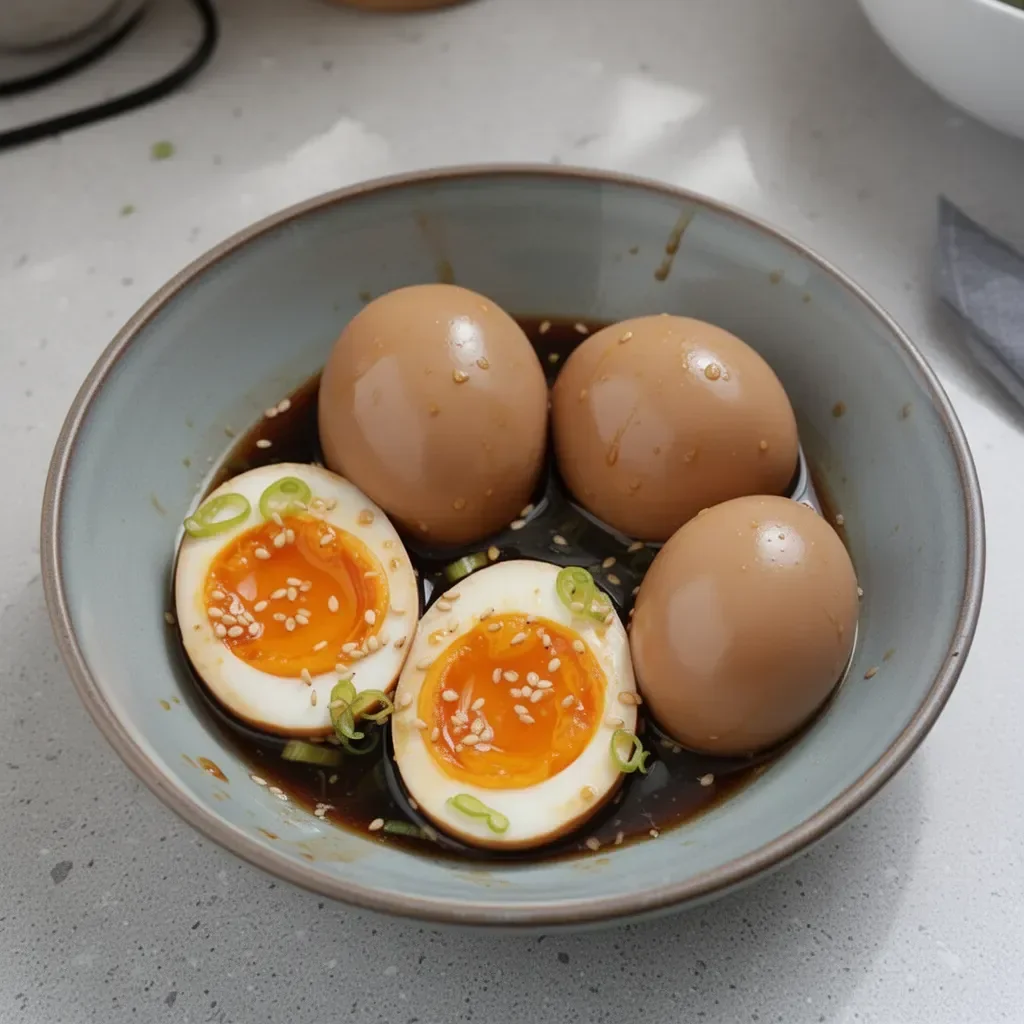
The yolks and outer eggs will deepen in color as they continue to soak in the marinade. This process not only enhances the visual appeal but also intensifies the flavor. Enjoy your homemade soy sauce eggs!
Part 2 — Memorable Techniques for Soy Sauce Eggs
Technique
Perfecting the technique of boiling and marinating eggs requires careful attention to detail. Swirling the water during early boiling helps achieve a beautifully centered yolk, which is visually pleasing. Once the eggs are in the ice bath, give them a gentle stir, ensuring complete immersion.
For the marinade, ensure all ingredients are well-combined before adding the eggs. The goal is to create a uniform flavor that penetrates the eggs uniformly. Allow the eggs to soak longer for a more robust flavor profile.
Tips and Tricks
Achieve the best results with a few handy tips. If you prefer your eggs with a slightly firmer yolk, aim for the higher end of the boiling time. When deshelling the eggs, gently tap them to create small cracks before running them under water, which will make the peeling process easier.
For those who enjoy experimenting, consider the addition of spices to your marinade. Adding a touch of ginger or chili flakes can elevate the flavor, providing a unique twist to the traditional soy sauce eggs.
Part 3 — Perfecting Your Soy Sauce Eggs
Perfecting Results
To perfect your soy sauce eggs, ensure you use high-quality soy sauce. This choice significantly impacts the final flavor, bringing out the richness in each bite. The longer the eggs steep in the marinade, the deeper the flavor will be, resulting in a satisfying umami experience.
If you find yourself after a more pronounced garlic flavor, try to add an extra clove or two in the marinade. This adjustment helps create a stronger aroma and taste, enhancing the overall dish.
Troubleshooting and Variations
Troubleshooting can also enhance your experience. If the eggs are hard to peel, they might have been too fresh. Older eggs tend to peel more easily. If you accidentally overcook the eggs, you may find the yolks are dry. In that case, reduce the boiling time next time for softer results.
Feel free to experiment with the marinade by swapping the rice vinegar for another type of vinegar. Each type offers a unique taste, allowing you to customize your soy sauce eggs according to your preferences.
Part 4 — Serving and Enjoying Soy Sauce Eggs
Serving and Presentation
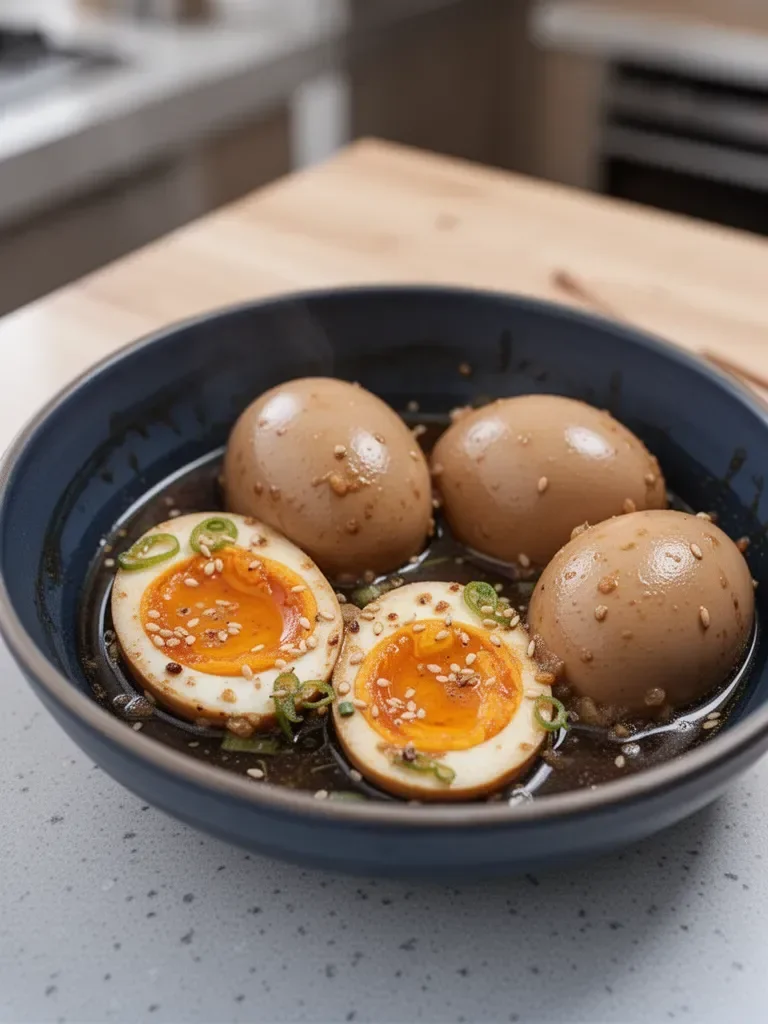
Serving soy sauce eggs can be as simple or as elegant as you wish. Slice them in half to reveal the beautiful yolks and serve them on a bed of greens or alongside rice. Their rich brown color makes for an appealing plate, adding visual interest to your meal.
For a more casual presentation, serve them whole as a snack or appetizer. The unique flavor makes them suitable for various occasions, from weeknight family dinners to gatherings with friends.
Pairings and Storage
These soy sauce eggs can complement an array of dishes. Pair them with steamed rice or stir-fried vegetables for a complete meal. They also work wonderfully in salad dishes, lending their rich flavor to the fresh ingredients alongside them.
When storing, keep the eggs submerged in the soy sauce mixture. They will stay fresh for about 4-5 days in the refrigerator, ensuring they remain flavorful and ready to enjoy. The eggs will continue to darken in color as they steep longer, giving them a deeper taste.
Conclusion
Creating soy sauce eggs offers an opportunity to transform everyday ingredients into a dish bursting with flavor. The blend of garlic and soy sauce elevates simple boiled eggs into an impressive treat that everyone can enjoy. With easy preparation steps and room for experimentation, these eggs can become a staple in your cooking. Every bite serves as a reminder of the joy found in making food from scratch and sharing those creations with others. Embrace the versatility and deliciousness of soy sauce eggs, and make them a part of your culinary adventures.
Print
Soy Sauce Eggs
- Total Time: 24 hours 22 minutes
- Yield: 6 servings 1x
- Diet: Vegetarian
Description
Delightfully marinated soy sauce eggs infused with garlic and rich flavors, perfect for any meal.
Ingredients
- 6 large eggs
- ¾ cup soy sauce
- 3 garlic cloves, grated
- 1½ tablespoons rice vinegar
- 1½ tablespoons sugar
- 2 cups water
Instructions
- Prepare a bowl with cold water and enough ice cubes to create an icy bath. Set aside.
- In a medium saucepan, bring enough water to cover the eggs to a rolling boil. Carefully drop eggs into the water and boil for 7 minutes for a runny yolk or 7½ minutes for a firmer yolk.
- After the desired cooking time, remove the eggs from the pan and place them into the ice bath. Leave them submerged for 2 minutes or until cool enough to handle.
- Under slow running water, deshell the eggs and place them on a paper towel to remove any excess water.
- In a small saucepan, combine the soy sauce, grated garlic, rice vinegar, sugar, and water. Bring this mixture to a boil, then reduce the heat to a simmer and cook for 3 minutes. Remove from heat and allow it to cool to room temperature.
- Pour the soy sauce mixture into a medium or large bowl. Add the eggs and cover them completely with the marinade. Steep the eggs in the soy sauce mixture for at least 12-24 hours before consuming.
Notes
For a unique twist, consider adding ginger or chili flakes to the marinade. Store eggs submerged in the soy sauce mixture for optimal freshness.
- Prep Time: 15 minutes
- Cook Time: 7 minutes
- Category: Appetizer
- Method: Boiling, Marinating
- Cuisine: Asian
Nutrition
- Serving Size: 1 egg
- Calories: 80
- Sugar: 1.5g
- Sodium: 840mg
- Fat: 5g
- Saturated Fat: 1.5g
- Unsaturated Fat: 3g
- Trans Fat: 0g
- Carbohydrates: 3g
- Fiber: 0g
- Protein: 7g
- Cholesterol: 186mg
Keywords: soy sauce, eggs, marinade, appetizer, vegetarian